What affects photoresist coating uniformity across a wafer?
Author
Date Published
Reading Time
Photoresist coating uniformity across a wafer depends on more than spin speed. Resist viscosity, dispense volume, wafer surface condition, temperature, humidity, and exhaust airflow can all affect film thickness and defects.
For operators of Photoresist Coaters and Developers, understanding how these variables interact is essential to maintaining a stable lithography process. Practical checks can help identify problems before they affect downstream patterning and yield.
The most useful starting point is the thickness map: determine whether variation is radial, directional, localized, or changing over time. Then compare affected wafers with the equipment and material history.
What does the wafer thickness pattern tell you?

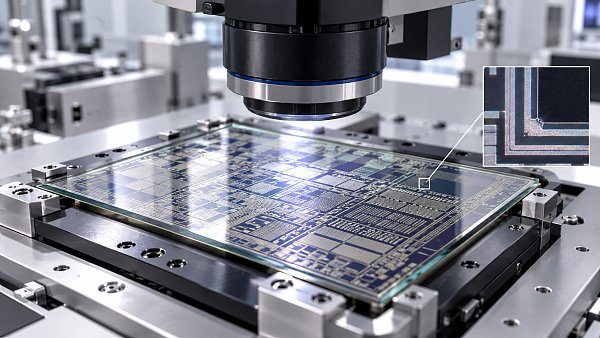
A thickness map is more informative than a single average. Wafers with similar mean thickness can have different center-to-edge profiles, local defects, or edge behavior that matters during exposure.
A radial pattern, such as a thick center or edge, can point toward dispense, spin, solvent evaporation, or exhaust conditions. It does not identify one cause by itself.
A directional pattern may indicate airflow, wafer positioning, or a local equipment condition. Compare the map with wafer orientation and chamber coordinates before deciding which direction matters.
Streaks, spots, or isolated patches deserve a defect review as well as a thickness check. Bubbles, particles, surface contamination, and dispense problems can produce localized signatures.
First confirm that the metrology recipe, measurement locations, edge exclusion, and wafer orientation match the reference. A changed sampling plan can make a stable process look different.
Compare multiple wafers and lots, not just one map. A repeatable signature suggests a systematic condition, while intermittent variation may require closer review of events and handling.
How do dispense volume and nozzle condition affect coating?
The dispense step must establish a consistent liquid film before spinning spreads and thins it. An unstable starting condition can leave nonuniformity that later spin stages cannot fully remove.
Too little resist, inconsistent dispense timing, or poor nozzle positioning can cause incomplete coverage or local variation. Excess dispense may increase waste and influence defects without improving uniformity.
Bubbles in the resist or dispense line can interrupt flow and create visible defects. Check approved bubble detection, purge, and recovery procedures when the signature or equipment alarm supports it.
Nozzle buildup, partial blockage, or dripping can also alter delivery. Inspect and clean only under the tool supplier's and fab's approved procedures, using specified materials and protective equipment.
Review dispense pressure, flow monitoring, nozzle movement, and recent maintenance records against the qualified baseline. A nominal recipe setting does not prove the delivered volume stayed consistent.
When comparing results, distinguish the first wafer after idle time from later wafers. Time-dependent dispense behavior may reveal a conditioning or delivery issue that a lot average hides.
Why do resist viscosity and material condition matter?
Resist viscosity influences how the liquid spreads and thins during spinning. It depends on the formulation and temperature, and can change if solvent content or material condition changes.
Check the resist type, lot, expiration status, storage history, and approved time at room temperature. A material substitution or handling deviation should be evaluated through the fab's change process.
Resist and wafer temperature can differ after a bottle change or equipment idle period. Follow the supplier's and site requirements for equilibration rather than assuming every container is ready immediately.
Track whether a shift began with a new bottle or lot, but avoid treating correlation as proof. Other changes, including filter replacement or maintenance, may have occurred at the same time.
Do not dilute, mix, or adjust resist outside an approved procedure to correct thickness. Such changes can affect coating, exposure, development, contamination risk, and the validity of qualification data.
How do spin settings and wafer handling influence the film?
Spin speed affects final thickness, but acceleration, duration, and the timing of dispense relative to spin also shape the coating process. Evaluate the complete qualified sequence.
Compare commanded settings with available equipment feedback and alarms. A drive or chuck issue can matter even when the displayed recipe matches the intended values.
Wafer centering and secure chucking support repeatable rotation. A misaligned or improperly held wafer can produce a directional signature and may create handling or safety risks.
Inspect the chuck and contact surfaces under approved maintenance procedures. Residue, particles, or damaged components can interfere with positioning or holding and may also introduce backside contamination.
Do not change spin speed solely to bring the average thickness back into specification. First establish whether the underlying cause is equipment, material, or wafer condition.
A recipe adjustment can mask a developing fault and change the thickness profile. Any change should follow engineering approval, appropriate testing, and documented acceptance criteria.
Can wafer surface condition cause uneven coating?
Yes. Coating depends on how the resist wets the surface, so incoming film composition, cleanliness, moisture, and surface preparation can affect coverage and local uniformity.
Compare affected wafers by incoming layer, upstream chamber, cleaning history, and time since surface preparation. A problem limited to one product or incoming film may not originate in the coater.
Dehydration and adhesion promotion must be consistent with the qualified process. Differences in bake conditions, treatment delivery, or queue time can change surface behavior and subsequent resist adhesion.
Look for localized dewetting, bare areas, or unusual edge coverage alongside the thickness map. These observations can help distinguish a surface issue from a broad spin-related thickness shift.
Handle wafers according to contamination-control rules and avoid unapproved inspection methods. Coordinate with process engineering before introducing additional cleaning or rework, because either can affect the substrate.
What role do temperature, humidity, and exhaust play?
Environmental conditions affect solvent evaporation during coating and can influence resist properties and surface preparation. Their effects depend on the resist, tool design, and process sequence.
Temperature variation across the tool or between wafers can alter repeatability. Review equipment and facility trends, including resist temperature where monitored, against the qualified operating window.
Humidity can affect wafer surface moisture and adhesion preparation. Interpret humidity data together with upstream treatment and queue time instead of assuming a room reading describes the wafer surface.
Exhaust airflow helps remove solvent vapor, but changes in flow or chamber pressure can alter evaporation and coating behavior. A directional signature may warrant checking the airflow path.
Review alarms, filter service, exhaust balancing, and recent facility work. Use qualified maintenance personnel for airflow measurements and adjustments; operators should not bypass interlocks or alter exhaust settings independently.
Because these variables interact, a stable spin recipe can still produce a shifted film after an environmental change. Correlate time-stamped trends with wafer results before assigning a cause.
How can operators distinguish coating variation from downstream effects?
Measure at the defined process checkpoint. A thickness result after a post-apply bake reflects both the coating step and the bake, so it should not automatically be attributed to spinning.
Check bake plate temperature, contact, timing, transfer delay, and plate assignment when the shift appears after baking. Compare equivalent measurements before and after bake if the control plan permits.
Development occurs after exposure and post-exposure processing in many lithography flows. A final pattern difference may involve exposure, bake, development, or measurement rather than coating alone.
For Photoresist Coaters and Developers, trace each wafer through the relevant modules. Shared track history can narrow the investigation without assuming that every affected wafer used the same chamber.
Film thickness nonuniformity can affect exposure response and pattern dimensions, but the impact depends on the process window and feature requirements. Confirm the relationship with qualified downstream data.
What should you check when uniformity moves out of control?
Start with the site's response plan: contain affected wafers, notify the responsible engineer, and preserve equipment and metrology records. Do not continue processing outside approved limits.
Confirm the measurement before intervening. Check instrument status, recipe, wafer identification, measurement locations, and repeatability using the established verification procedure.
Compare the affected wafer map with the last known good baseline. Note the magnitude, shape, orientation, edge exclusion, and whether defects occur in the same locations.
Build a timeline covering material changes, maintenance, alarms, idle periods, environmental excursions, and upstream changes. Include module assignments and wafer sequence where the system records them.
Check the most relevant evidence first. A first-wafer-only issue suggests a different investigation from a persistent shift across every wafer or a pattern confined to one incoming film.
When engineering authorizes a diagnostic test, vary only the factors needed to answer the question and use suitable monitor wafers. Record all conditions so results remain interpretable.
After corrective work, verify recovery against the control plan using the required number of wafers and relevant downstream checks. A single acceptable average may not demonstrate stable uniformity.
Which records help prevent repeat problems?
Maintain a baseline for each qualified resist and process, including thickness targets, map shape, measurement recipe, control limits, and the approved edge exclusion.
Trend within-wafer uniformity separately from wafer-to-wafer and lot-to-lot variation. Each describes a different problem, and a stable average can conceal an increasingly uneven film.
When reporting uniformity, state the calculation used, such as range divided by twice the mean, along with sampling and edge exclusion. Do not compare percentages with different definitions.
Link results to tool module, resist lot, maintenance events, environmental data, and wafer sequence. These records make recurring signatures easier to recognize and supplier discussions more productive.
Escalate repeated minor shifts before they become excursions. A gradual trend may justify planned maintenance or engineering review even while individual wafers remain within limits.
Conclusion: use the pattern to guide the investigation
Photoresist uniformity is the outcome of material delivery, wafer condition, spin dynamics, solvent evaporation, and environmental control. No single setting explains every thickness map or defect.
For operators, the most reliable approach is to verify the measurement, classify the signature, review the process history, and follow the approved containment and recovery procedures.
Use thickness maps together with module records and downstream results to test likely causes. That discipline supports stable coating without masking faults through unnecessary recipe changes.
Questions about market trends? Contact Market Scope Live for deeper business insights.
We respect your privacy. Your information is strictly confidential.
We respect your privacy. Your information is strictly confidential.
Related News
 Yield ImprovementWhen can photomask defect inspection miss printable defects?Photomask defect inspection can miss printable defects. Discover key causes, review triggers, and practical ways to strengthen mask quality and wafer yield.MORE+
 Yield ImprovementWhat causes solder joint failure in ball grid array packages?Ball Grid Array Packages can fail due to thermal cycling, board flex, and hidden assembly defects. Discover how to investigate failures and improve reliability.MORE+
 Yield ImprovementWhy Is Wafer Chipping Increasing During Dicing?Why is wafer chipping increasing during dicing? Explore blade, cooling, mounting and process factors, and discover practical steps to protect yield.MORE+
 Yield ImprovementWhat affects photoresist coating uniformity across a wafer?Photoresist Coaters and Developers: Discover what affects wafer coating uniformity and how to troubleshoot thickness variation for a more stable lithography process.MORE+
 Yield ImprovementHow temperature uniformity affects diffusion furnace yieldSemiconductor Diffusion Furnaces depend on temperature uniformity for consistent yields. Explore how to diagnose variations and evaluate furnace performance.MORE+
 Yield ImprovementWhat causes poor contact in semiconductor probe stations?Semiconductor Probe Stations can suffer poor contact due to dirty tips, misalignment, or electrical faults. Discover practical ways to isolate and resolve the cause.MORE+