Rapid thermal processing or batch furnaces for wafer annealing?
Author
Date Published
Reading Time
Choose rapid thermal processing (RTP) when the anneal requires a tightly limited thermal budget, fast temperature transitions, or frequent recipe changes across individual wafers. A batch furnace is often the stronger candidate when the process tolerates a longer thermal cycle and enough compatible wafers are available to keep the load efficiently occupied. Neither choice follows from nominal wafers per hour alone: the acceptable temperature history, wafer stack, contamination limits, and actual lot flow determine whether the equipment can deliver the required result.
The first selection gate is the process window. If a device structure cannot tolerate the heat exposure associated with loading, ramping, soaking, and cooling in a furnace, a high-capacity batch tool is not a viable substitute for RTP. Conversely, if the required film transformation needs a sustained soak and the queue regularly contains compatible lots, single-wafer processing may add handling and tool occupancy without a corresponding device benefit.
Compare the thermal history, not just the peak temperature
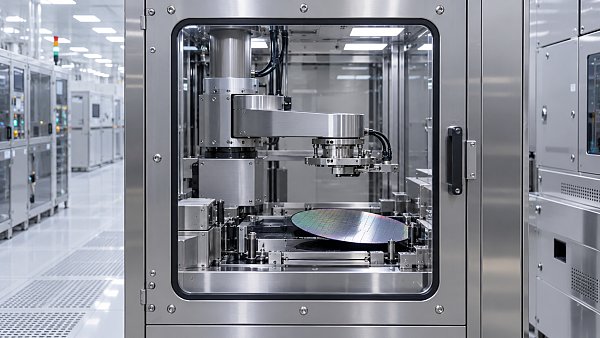
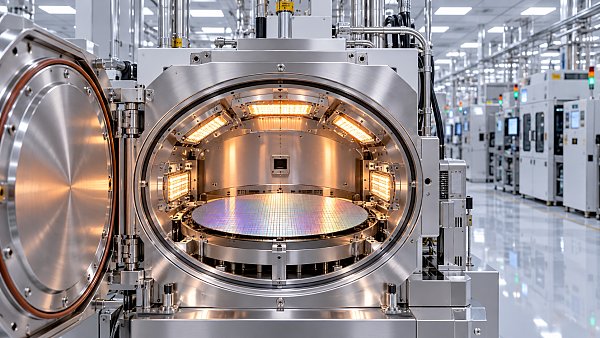
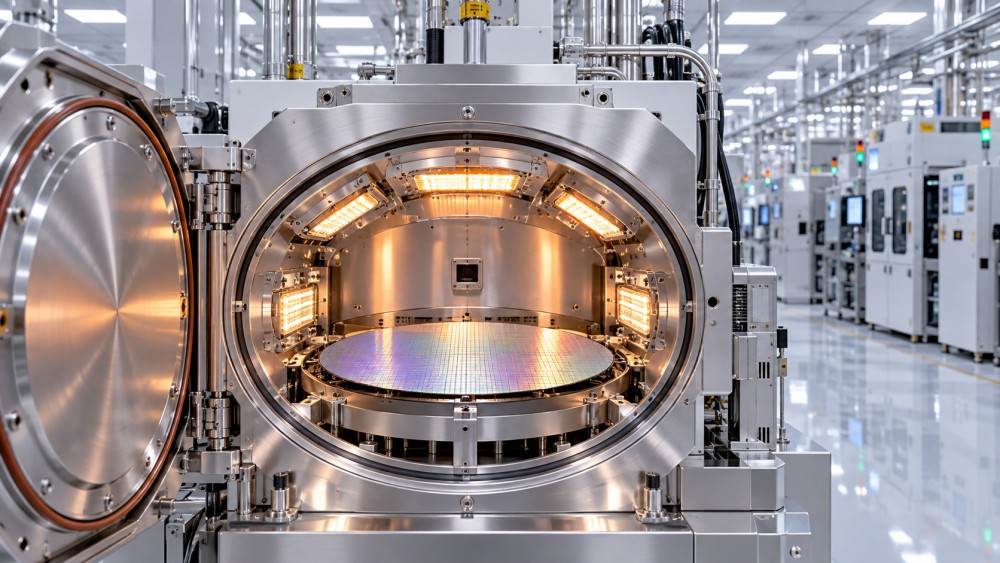
RTP heats wafers individually, commonly using lamps and optical temperature measurement, although equipment designs vary. Its relatively rapid ramp and short dwell make it useful for applications where diffusion or unwanted reactions must be constrained. Batch furnaces heat multiple wafers in a controlled tube or chamber, with the load experiencing a longer approach to and departure from the target temperature. Furnace configurations and recipes vary substantially, so a single temperature profile cannot represent every system.
A recipe specified only as a peak temperature and soak time leaves out much of the comparison. The wafer continues to accumulate thermal exposure during both ramp and cooldown. For a temperature-sensitive diffusion or reaction, a modest difference in the shape of the temperature curve can change the result even when peak temperature and nominal dwell match. The relevant comparison is the temperature experienced by the wafer, coupled to the electrical, structural, or chemical outcome required by the process.
Temperature readings also need context. An RTP system may infer wafer temperature from emitted radiation; the apparent signal is affected by emissivity, which changes with material, thickness, surface condition, and temperature. A patterned wafer can behave differently from the blanket monitor used to establish a recipe. Furnace zone sensors, meanwhile, indicate conditions at their measurement locations, not automatically the temperature of every wafer within a loaded boat. A recipe transfer therefore needs wafer-level evidence rather than matching equipment setpoints.
Cooling deserves equal attention. A fast initial ramp does not guarantee a low total thermal exposure if the wafer remains hot during cooldown. In a furnace, load density, carrier design, gas flow, and the permitted removal temperature affect the time required to return wafers to a safe handling condition. For either architecture, compare the complete trajectory over the temperature range relevant to the mechanism being controlled.
Match the anneal to the material stack
Dopant activation is a familiar reason to consider RTP: a short high-temperature exposure can support activation while limiting unwanted dopant diffusion. The attainable balance still depends on the implant, substrate, preceding process, and recipe. Sheet resistance alone is insufficient evidence of success; junction behavior, leakage, and device-level electrical results may expose a different tradeoff.
Longer furnace anneals can be appropriate when the desired result requires extended thermal exposure, such as a film treatment or a reaction under a controlled atmosphere. The choice is constrained by everything already present on the wafer. A temperature that suits one layer may alter another through diffusion, stress, phase change, oxidation, or a reaction at an interface. A later-stage wafer with metals or other temperature-sensitive materials can have a much narrower process window than a bare silicon monitor.
Atmosphere is part of the recipe, not an accessory to the temperature profile. Oxygen, inert gas, or a reducing ambient can affect the surface and interfaces differently. Residual moisture and oxygen, purge effectiveness, pressure, and gas-switching behavior can matter when the intended reaction is sensitive to trace species. A furnace and an RTP chamber set to the same nominal gas composition should not be presumed to expose wafers to the same transient conditions.
Document the starting state before comparing results: substrate and wafer diameter, film stack and thicknesses, patterned or blanket surface, prior thermal history, allowable wafer bow, and time between the preceding step and anneal. Differences in native oxide or surface condition can otherwise be mistaken for differences between thermal platforms.
Uniformity has several directions
A single uniformity number rarely explains whether a process is transferable. Separate within-wafer variation from wafer-to-wafer variation and, for a batch furnace, variation across positions in the boat. Report the measured property, sampling locations, calculation method, and load configuration. Temperature uniformity and final electrical or film-property uniformity are related, but they are not interchangeable measurements.
RTP uniformity is influenced by wafer edge behavior, lamp distribution, chamber condition, and the temperature measurement strategy. Film and pattern differences can complicate optical temperature control. A clean blanket wafer that meets a temperature criterion does not establish that a patterned product wafer will meet a resistance or defect criterion across its full area.
In a furnace, thermal zones, boat geometry, spacing, and gas delivery influence the exposure across the load. An anneal that performs well at the center of a full boat may behave differently near its ends or with a partially loaded batch. Empty positions, dummy wafers, and mixed product stacks can change the thermal and gas-flow environment. Qualification should cover the intended loading rules, including the smallest permitted load, rather than relying exclusively on a full-load demonstration.
Wafer bow and slip or other thermally induced defects are separate acceptance concerns. Heating rate, temperature gradients, support contact, and wafer construction can all influence mechanical response. A recipe that meets an average film target can still fail because its edges or support-contact regions accumulate defects.
Throughput depends on the lot flow
For RTP, sustained capacity includes wafer transfer, chamber preparation, temperature ramp, dwell, cooldown, and any recipe-dependent stabilization or cleaning. A quoted processing rate should state whether it includes handling and the actual product recipe. Shortening the dwell will have limited impact when transfer or cooldown occupies a substantial share of the cycle.
For a furnace, calculate output using the number of qualified product wafers in a load divided by the complete load-to-load cycle. Include loading, purge, ramp, soak, cooldown, unloading, and any required recovery. Dummy wafers occupy positions without producing saleable output. Waiting to assemble a full compatible batch adds cycle time even if the furnace itself is highly productive once running.
Product mix changes the answer. A facility processing many small lots with different recipes may leave furnace capacity unused or hold lots in a queue. A stable flow of compatible wafers can spread the furnace cycle across a large batch. RTP supports individual-wafer recipe selection, but switching recipes can still require stabilization, qualification restrictions, or chamber conditioning. Those transitions belong in the capacity model.
Compare tools over the same operating period and with the same mix, including scheduled maintenance, expected cleaning frequency, monitor wafers, and recovery after interruption. Keep queue time separate from tool processing time so that a capacity advantage is not confused with faster lot delivery. The useful result is a range of sustained output tied to explicit loading and availability assumptions, not a vendor maximum treated as a production commitment.
Contamination and maintenance change the operating window
Thermal processing can mobilize contaminants or transfer material from surfaces to wafers. Evaluate chamber or tube materials, wafer carriers, seals, gas lines, and cleaning chemistry against the specific stack. A furnace boat holds many wafers through a long exposure, making carrier condition and the history of previous loads relevant. In RTP, chamber surfaces, wafer supports, and residue from previous recipes also need control. Neither architecture is inherently clean enough for every application.
Cross-contamination limits can restrict which products share a tube or chamber. A tool that appears adequate on capacity may require dedicated process hardware, separate chambers, or additional cleaning cycles once metals, dopants, or other incompatible materials are considered. These restrictions affect both footprint and effective output.
Maintenance intervals should be tied to measurable conditions where possible: particle performance, temperature calibration, lamp or sensor behavior, tube and boat condition, and drift in product monitors. Ask how a chamber is returned to production after cleaning or component replacement, including the monitor wafers, seasoning, and acceptance tests needed. A short maintenance task can still produce a long production interruption if recovery and requalification are excluded from the schedule.
Build a qualification comparison around the production recipe
A useful evaluation starts with a common starting wafer population and an agreed acceptance plan. Run representative material through each candidate process within its permitted operating window; forcing identical setpoints onto different equipment does not necessarily produce a meaningful comparison. Record the full temperature trajectory, ambient sequence, load pattern, and measurement methods, then compare outcomes against the same product requirements.
The evidence should include the properties the anneal is intended to change, as well as failure modes it could introduce. Depending on the stack, these might include sheet resistance and its spatial distribution, film thickness or phase, interface quality, leakage, particles, wafer bow, and downstream yield indicators. Measure repeatability across runs and after relevant maintenance events. For a furnace, sample wafer positions throughout the intended load; for RTP, include chamber-to-chamber comparisons if production will use multiple chambers.
A small development trial establishes feasibility, not sustained capability. Before accepting a proposed production configuration, define the number and type of runs needed to assess drift, the treatment of outliers, and the procedure for resolving a failed run. Include partial batches, product changes, and restart conditions if they are expected in normal operation. Where measurements are destructive or slow, agree on suitable process monitors and the relationship they must demonstrate to the product result.
Installation and acceptance terms
Semiconductor Thermal Processing Equipment must fit the facility as well as the recipe. Establish the required electrical supply, cooling, exhaust, process gases, gas abatement where applicable, and space for service access. Furnace tube removal and boat handling can impose clearance requirements distinct from those of an RTP cluster. Confirm wafer diameter, carrier and transfer interfaces, automation connectivity, and the handling limits for the intended wafers.
Translate the evaluation into acceptance criteria that name the wafer type, recipe, load, test method, and measurement boundary. A throughput test using a short demonstration recipe or a uniformity test on an unrelated monitor wafer does not establish performance on the production process. Separate equipment acceptance from process qualification: the former can demonstrate that the installed system meets agreed tool specifications, while the latter establishes whether the wafer outcome is acceptable.
Finally, define the consequences of changing the operating assumptions. If the expected full furnace load becomes a series of partial lots, or if an RTP recipe requires a longer cooldown to protect the stack, revisit both output and cycle time using the revised conditions. That comparison keeps the selection tied to the process that will actually run.
Questions about market trends? Contact Market Scope Live for deeper business insights.
We respect your privacy. Your information is strictly confidential.
We respect your privacy. Your information is strictly confidential.
Related News
 Wafer Fab EquipmentHow to size semiconductor manufacturing equipment for wafer fabsSize semiconductor manufacturing equipment for wafer fabs with confidence. Learn to model capacity, assess bottlenecks, and make smarter procurement decisions.MORE+
 Wafer Fab EquipmentWhen should semiconductor manufacturing equipment maintenance be scheduled?Semiconductor manufacturing equipment maintenance should follow approved time, usage, and condition limits. Learn how to schedule service and protect production.MORE+
 Wafer Fab EquipmentWhen should chemical vapor deposition equipment be cleaned?Chemical Vapor Deposition Equipment cleaning depends on buildup, defect trends and validated limits. Learn when to act to protect wafer quality and uptime.MORE+
 Wafer Fab EquipmentHow residual gas analyzers help detect vacuum chamber leaksResidual Gas Analyzers help detect vacuum chamber leaks. Explore gas signatures, tracer testing, and practical steps to pinpoint problems with confidence.MORE+
 Wafer Fab EquipmentHow to Test Material Handling Recovery After a Power OutageHow can I test material handling recovery after a power outage? Explore a practical guide to verifying carrier locations, safe transfers, and system readiness.MORE+
 Wafer Fab EquipmentWhat to Do When a Wafer Handling Robot Drops a WaferWhat should I do if a wafer handling robot drops a wafer? Learn how to contain risks, protect affected lots, investigate the cause, and safely restart production.MORE+
 Wafer Fab EquipmentDoes a PVD Tool Need a Dedicated Cooling Water Supply?Does a PVD tool need a dedicated cooling water supply? Discover when shared cooling works, when a chiller is needed, and what to check before installation.MORE+
 Wafer Fab EquipmentRapid thermal processing or batch furnaces for wafer annealing?Semiconductor Thermal Processing Equipment: Compare RTP and batch furnaces for wafer annealing to find the right fit for your process, throughput and yield goals.MORE+
 Wafer Fab EquipmentPreventing moisture contamination in semiconductor gas delivery systemsSemiconductor Gas Delivery Systems need effective moisture control. Discover practical design, monitoring, and maintenance strategies to protect gas purity.MORE+